Playing with numbers Ex-3.5
NCERT solutions for Maths Playing with numbers
NCERT Solutions for Class 6 Maths Playing with numbers
Class –VI
Mathematics
(Ex. 3.5)
Question 1.Which of the following statements are true:
(a)If a number is divisible by 3, it must be divisible by 9.
(b)If a number is divisible by 9, it must be divisible by 3.
(c)If a number is divisible by 18, it must be divisible by both 3 and 6.
(d)If a number is divisible by 9 and 10 both, then it must be divisible by 90.
(e)If two numbers are co-primes, at least one of them must be prime.
(f)All numbers which are divisible by 4 must also by divisible by 8.
(g)All numbers which are divisible by 8 must also by divisible by 4.
(h)If a number is exactly divides two numbers separately, it must exactly divide their sum.
(i)If a number is exactly divides the sum of two numbers, it must exactly divide the two numbers separately.
Answer: Statements (b), (c), (d), (g) and (h) are true.
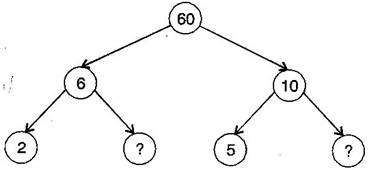
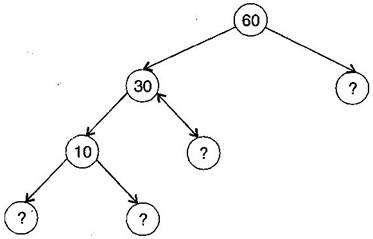
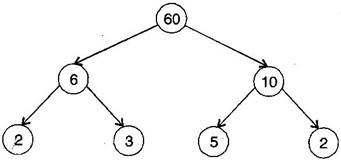
Question 2.Here are two different factor trees for 60. Write the missing numbe
(a)
(b)
Answer: Sol.
(a)
(b)
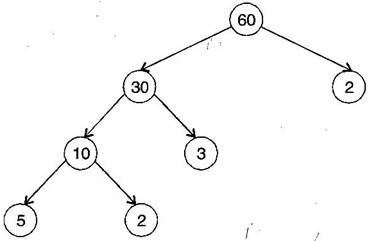
NCERT Solutions for Class 6 Maths 3.5
Question 3.Which factors are not included in the prime factorization of a composite number?
Answer: 1
Question 4.Write the greatest 4-digit number and express it in terms of its prime facto
Answer: The greatest four digit number is 9999.
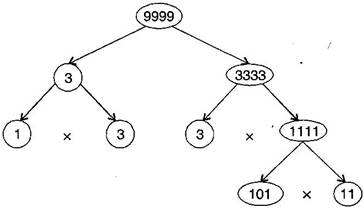
The prime factors of 9999 are 3 x 3 x 11 x 101.
NCERT Solutions for Class 6 Maths 3.5
Question 5.Write the smallest 5-digit number and express it in terms of its prime facto
Answer: The smallest five digit number is 10000.
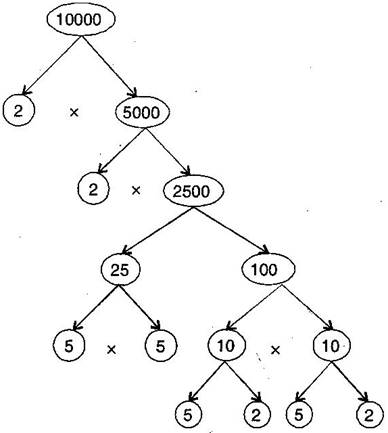
The prime factors of 10000 are 2 x 2 x 2 x 2 x 5 x 5 x 5 x 5.
Question 6.Find all the prime factors of 1729 and arrange them in ascending order. Now state the relation, if any, between, two consecutive prime numbe
Answer: Sol.
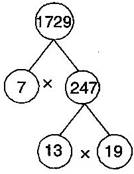
Prime factors of 1729 are 7 x 13 x 19.
The difference of two consecutive prime factors is 6.
NCERT Solutions for Class 6 Maths 3.5
Question 7.The product of three consecutive numbers is always divisible by 6. Verify this statement with the help of some examples.
Answer: Among the three consecutive numbers, there must be one even number and one multiple of 3. Thus, the product must be multiple of 6.
Example:(i) 2 x 3 x 4 = 24
(ii) 4 x 5 x 6 = 120
Question 8.The sum of three consecutive numbers is always divisible by 4. Verify this statement with the help of some examples.
Answer: 3 + 5 = 8 and 8 is divisible by 4.
5 + 7 = 12 and 12 is divisible by 4.
7 + 9 = 16 and 16 is divisible by 4.
9 + 11 = 20 and 20 is divisible by 4.
NCERT Solutions for Class 6 Maths 3.5
Question 9.In which of the following expressions, prime factorization has been done:
(a)24 = 2 x 3 x 4
(b)56 = 7 x 2 x 2 x 2
(c)70 = 2 x 5 x 7
(d)54 = 2 x 3 x 9
Answer: In expressions (b) and (c), prime factorization has been done.
Question 10.Determine if 25110 is divisible by 45.
[Hint: 5 and 9 are co-prime numbe Test the divisibility of the number by 5 and 9.]Answer: The prime factorization of 45 = 5 x 9
25110 is divisible by 5 as ‘0’ is at its unit place.
25110 is divisible by 9 as sum of digits is divisible by 9.
Therefore, the number must be divisible by 5 x 9 = 45
NCERT Solutions for Class 6 Maths 3.5
Question 11. 18 is divisible by both 2 and 3. It is also divisible by 2 x 3 = 6. Similarly, a number is divisible by 4 and 6. Can we say that the number must be divisible by 4 x 6 = 24? If not, give an example to justify your answer.
Answer: No. Number 12 is divisible by both 6 and 4 but 12 is not divisible by 24.
Question 12.I am the smallest number, having four different prime facto Can you find me?
Answer: 2 x 3 x 5 x 7 = 210