Electrochemistry part 2
Download as PDF.
NCERT Class 12 Chemistry Chapter-wise Solutions
- The Solid State
- Solutions
- Electrochemistry
- Chemical Kinetics
- Surface Chemistry
- General Principles and Processes of Isolation of Elements
- The p-Block Elements
- The d-and f-Blocks Elements
- Coordination Compounds
- Haloalkanes and Haloarenes
- Alcohols, Phenols and Ethers
- Aldehydes, Ketones and Carboxylic Acids
- Amines
- Biomolecules
- Polymers
- 16 – Chemistry in Everyday Life
CHAPTER THREE ELECTROCHEMISTRY
- 3.1 Electrochemical Cells
- 3.2 Galvanic Cells
- 3.3 Nernst Equation
- 3.4 Conductance of Electrolytic Solutions
- 3.5 Electrolytic Cells and Electrolysis
- 3.6 Batteries
- 3.7 Fuel Cells
- 3.8 Corrosion
NCERT Solutions class 12 Chemistry ElectroChemistry part 2
10. The conductivity of sodium chloride at 298 K has been determined at different concentrations and the results are given below: Concentration/M 0.001 0.010 0.020 0.050 0.100 
Calculate  for all concentrations and draw a plot betweenand
  . Find the value of .
11. Conductivity of 0.00241 M acetic acid is  . Calculate its molar conductivity and if
  for acetic acid is
  , what is its dissociation constant?
12. How much charge is required for the following reductions:
(i) 1 mol of  to Al.
(ii) 1 mol of  to Cu.
(iii) 1 mol of  to
to  .
.
13. How much electricity in terms of Faraday is required to produce
(i) 20.0 g of Ca from molten  .
.
(ii) 40.0 g of Al from molten  .
.
14. How much electricity is required in coulomb for the oxidation of
(i) 1 mol of  to
to  .
.
(ii) 1 mol of FeO to  .
.
15. A solution of  is electrolysed between platinum electrodes using a current of 5 amperes for 20 minutes. What mass of Ni is deposited at the cathode?
16. Three electrolytic cells A,B,C containing solutions of 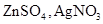 and
and  respectively are connected in series. A steady current of 1.5 amperes was passed through them until 1.45 g of silver deposited at the cathode of cell B. How long did the current flow? What mass of copper and zinc were deposited?
17. Using the standard electrode potentials given in Table 3.1, predict if the reaction between the following is feasible:
(i)  and
and
(ii)  and Cu(s)
(iii) and 
(iv) Ag(s) and
(v)  and
and  .
.
18. Predict the products of electrolysis in each of the following:
(i) An aqueous solution of  with silver electrodes.
(ii) An aqueous solution of with platinum electrodes.
(iii) A dilute solution of  with platinum electrodes.
(iv) An aqueous solution of  with platinum electrodes.
covers both organic and inorganic chemistry. Please note that CBSE has reduced the syllabus for class 12 Chemistry. So, you must check the latest syllabus of CBSE while going through the NCERT solution of any chapter given in the class 12 NCERT book.