Coordination Compounds In-text Questions
Download as PDF.
NCERT Class 12 Chemistry Chapter-wise Solutions
- 1 – The Solid State
- 2 – Solutions
- 3 – Electrochemistry
- 4 – Chemical Kinetics
- 5 – Surface Chemistry
- 6 – General Principles and Processes of Isolation of Elements
- 7 – The p-Block Elements
- 8 – The d-and f-Blocks Elements
- 9 – Coordination Compounds
- 10 – Haloalkanes and Haloarenes
- 11 – Alcohols, Phenols and Ethers
- 12 – Aldehydes, Ketones and Carboxylic Acids
- 13 – Amines
- 14 – Biomolecules
- 15 – Polymers
- 16 – Chemistry in Everyday Life
CHAPTER NINE COORDINATION COMPOUNDS
- 9.1 Werner’s Theory of Coordination Compounds
- 9.2 Definition of Some Important Terms Pertaining to Coordination Compounds
- 9.3 Nomenclature of Coordination Compounds
- 9.4 Isomerism in Coordination Compounds
- 9.5 Bonding in Coordination Compounds
- 9.6 Bonding in Metal Carbonyls
- 9.7 Stability of Coordination Compounds
- 9.8 Importance and Applications of Coordination Compounds
NCERT Solutions class 12 Chemistry Coordination Compounds In text Questions
In-text question
1. Write the formulas for the following coordination compounds:
(i) Tetraamminediaquacobalt(III) chloride
(ii) Potassium tetracyanonickelate(II)
(iii) Tris(ethane-1,2-diamine) chromium(III) chloride
(iv) Amminebromidochloridonitrito-N-platinate(II)
(v) Dichloridobis(ethane-1,2-diamine)platinum(IV) nitrate
(vi) Iron(III) hexacyanoferrate(II)
2. Write the IUPAC names of the following coordination compounds:
(i) 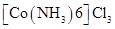
(ii) 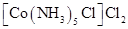
(iii) 
(iv) 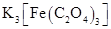
(v) 
(vi) 
3. Indicate the types of isomerism exhibited by the following complexes and draw the structures for these isomers:
(i) 
(ii) 
(iii) 
(iv) 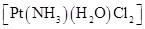
4. Give evidence that 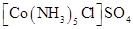 and
and 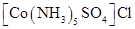 are ionization isomers.
5. Explain on the basis of valence bond theory that  ion with square planar structure is diamagnetic and the
  ion with tetrahedral geometry is paramagnetic.
6. is paramagnetic while  is diamagnetic though both are tetrahedral. Why?
7.  is strongly paramagnetic whereas
  is weakly paramagnetic. Explain.
8. Explain 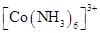 is an inner orbital complex whereas
  is an outer orbital complex.
9. Predict the number of unpaired electrons in the square planar  ion.
ion.
10. The hexaquo manganese (II) ion contains five unpaired electrons, while the hexacyanoion contains only one unpaired electron. Explain using Crystal Field Theory.
11. Calculate the overall complex dissociation equilibrium constant for the  ion, given that
  for this complex is
To download NCERT Solutions for class 12 Chemistry, Physics, Biology, History, Political Science, Economics, Geography, Computer Science, Home Science, Accountancy, Business Studies and Home Science; do check CBSE.club app or website. CBSE.club provides sample papers with solution, test papers for chapter-wise practice, NCERT solutions, NCERT Exemplar solutions, quick revision notes for ready reference, CBSE guess papers and CBSE important question papers. Sample Paper all are made available through and CBSE.club website.
covers both organic and inorganic chemistry. Please note that CBSE has reduced the syllabus for class 12 Chemistry. So, you must check the latest syllabus of CBSE while going through the NCERT solution of any chapter given in the class 12 NCERT book.