Chemical kinetics In-text question
Download as PDF.
NCERT Class 12 Chemistry Chapter-wise Solutions
- 1 – The Solid State
- 2 – Solutions
- 3 – Electrochemistry
- 4 – Chemical Kinetics
- 5 – Surface Chemistry
- 6 – General Principles and Processes of Isolation of Elements
- 7 – The p-Block Elements
- 8 – The d-and f-Blocks Elements
- 9 – Coordination Compounds
- 10 – Haloalkanes and Haloarenes
- 11 – Alcohols, Phenols and Ethers
- 12 – Aldehydes, Ketones and Carboxylic Acids
- 13 – Amines
- 14 – Biomolecules
- 15 – Polymers
- 16 – Chemistry in Everyday Life
CHAPTER FOUR CHEMICAL KINETICS
- 4.1 Rate of a Chemical Reaction
- 4.2 Factors Influencing Rate of a Reaction
- 4.3 Integrated Rate Equations
- 4.4 Pseudo First Order Reaction
- 4.5 Temperature Dependence of the rate of a Reaction
- 4.6 Collision Theory of Chemical Reactions
NCERT Solutions class 12 Chemistry Chemical kinetics In text question In-text question
1. For the reaction , the concentration of a reactant changes from 0.03 M to 0.02 M in 25 minutes. Calculate the average rate of reaction using units of time both in minutes and seconds.
2. In a reaction,  Products, the concentration of A decreases from
  to
to  in 10 minutes. Calculate the rate during this interval?
3. For a reaction, ’Product; the rate law is given by,
 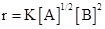 . What is the order of the reaction?
4. The conversion of molecules X to Y follows second order kinetics. If concentration of X is increased to three times how will it affect the rate of formation of Y?
5. A first order reaction has a rate constant  . How long will 5 g of this reactant take to reduce to 3 g?
6. Time required to decompose  to half of its initial amount is 60 minutes. If the decomposition is a first order reaction, calculate the rate constant of the reaction.
7. What will be the effect of temperature on rate constant?
8. The rate of the chemical reaction doubles for an increase of 10 K in absolute temperature from 298 K. Calculate  .
.
9. The activation energy for the reaction 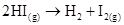 is
is  at 581 K. Calculate the fraction of molecules of reactants having energy equal to or greater than activation energy?
covers both organic and inorganic chemistry. Please note that CBSE has reduced the syllabus for class 12 Chemistry. So, you must check the latest syllabus of CBSE while going through the NCERT solution of any chapter given in the class 12 NCERT book.