Aldehydes ketones and carboxylic acid part 1
Download as PDF.
NCERT Class 12 Chemistry Chapter-wise Solutions
- 1 – The Solid State
- 2 – Solutions
- 3 – Electrochemistry
- 4 – Chemical Kinetics
- 5 – Surface Chemistry
- 6 – General Principles and Processes of Isolation of Elements
- 7 – The p-Block Elements
- 8 – The d-and f-Blocks Elements
- 9 – Coordination Compounds
- 10 – Haloalkanes and Haloarenes
- 11 – Alcohols, Phenols and Ethers
- 12 – Aldehydes, Ketones and Carboxylic Acids
- 13 – Amines
- 14 – Biomolecules
- 15 – Polymers
- 16 – Chemistry in Everyday Life
CHAPTER TWELVE ALDEHYDES, KETONES AND CARBOXYLIC ACIDS
- 12.1 Nomenclature and Structure of Carbonyl Group
- 12.2 Preparation of Aldehydes and Ketones
- 12.3 Physical Properties
- 12.4 Chemical Reacxtions
- 12.5 Uses of Aldehydes and Ketones
- 12.6 Nomenclature and Structure of Carboxyl Group
- 12.7 Methods of Preparation of Carboxylic Acids
- 12.8 Physical properties
- 12.9 Chemical Reactions
- 12.10 Uses of carboxylic Acids
NCERT Solutions class 12 Chemistry aldehydes ketones and carboxylic acid part 1
Chapter End Question
Part-1
1. What is meant by the following terms? Give an example of the reaction in each case.
(i) Cyanohydrin
(ii) Acetal
(iii) Semicarbazone
(iv) Aldol
(v) Hemiacetal
(vi) Oxime
(vii) Ketal
(viii) Imine
(ix) 2,4-DNP-derivative
(x) Schiff’s base
2. Name the following compounds according to IUPAC system of nomenclature:
(i) 
(ii) 
(iii) 
(iv) 
(v) 
(vi) 
(vii) 
3. Draw the structures of the following compounds.
(i) 3-Methylbutanal
(ii) p-Nitropropiophenone
(iii) p-Methylbenzaldehyde
(iv) 4-Methylpent-3-en-2-one
(v) 4-Chloropentan-2-one
(vi) 3-Bromo-4-phenylpentanoic acid
(vii) p,p‘-Dihydroxybenzophenone
(viii) Hex-2-en-4-ynoic acid
4. Write the IUPAC names of the following ketones and aldehydes. Wherever possible, give also common names.
(i) 
(ii) 
(iii) 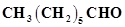
(iv) Ph-CH=CH-CHO
(v) 
(vi) PhCOPh
5. Draw structures of the following derivatives.
(i) The 2,4-dinitrophenylhydrazone of benzaldehyde
(ii) Cyclopropanoneoxime
(iii) Acetaldehydedimethylacetal
(iv) Thesemicarbazone of cyclobutanone
(v) The ethylene ketal of hexan-3-one
(vi) The methyl hemiacetal of formaldehyde
6. Predict the products formed when cyclohexanecarbaldehyde reacts with following reagents.
(i) PhMgBr and then 
(ii)Tollens’ reagent
(iii) Semicarbazide and weak acid
(iv)Excess ethanol and acid
(v) Zinc amalgam and dilute hydrochloric acid
7. Which of the following compounds would undergo aldol condensation, which the Cannizzaro reaction and which neither? Write the structures of the expected products of aldol condensation and Cannizzaro reaction.
(i) Methanal
(ii) 2-Methylpentanal
(iii) Benzaldehyde
(iv) Benzophenone
(v) Cyclohexanone
(vi) 1-Phenylpropanone
(vii) Phenylacetaldehyde
(viii) Butan-1-ol
(ix) 2, 2-Dimethylbutanal
8. How will you convert ethanal into the following compounds?
(i) Butane-1, 3-diol
(ii) But-2-enal
(iii) But-2-enoic acid
9. Write structural formulas and names of four possible aldol condensation products from propanal and butanal. In each case, indicate which aldehyde acts as nucleophile and which as electrophile.
10. An organic compound with the molecular formula  forms 2, 4-DNP derivative, reduces Tollens’ reagent and undergoes Cannizzaro reaction. On vigorous oxidation, it gives 1, 2-benzenedicarboxylic acid. Identify the compound.
covers both organic and inorganic chemistry. Please note that CBSE has reduced the syllabus for class 12 Chemistry. So, you must check the latest syllabus of CBSE while going through the NCERT solution of any chapter given in the class 12 NCERT book.