Alcohol phenol and ether In-text Questions
Download as PDF.
NCERT Class 12 Chemistry Chapter-wise Solutions
- 1 – The Solid State
- 2 – Solutions
- 3 – Electrochemistry
- 4 – Chemical Kinetics
- 5 – Surface Chemistry
- 6 – General Principles and Processes of Isolation of Elements
- 7 – The p-Block Elements
- 8 – The d-and f-Blocks Elements
- 9 – Coordination Compounds
- 10 – Haloalkanes and Haloarenes
- 11 – Alcohols, Phenols and Ethers
- 12 – Aldehydes, Ketones and Carboxylic Acids
- 13 – Amines
- 14 – Biomolecules
- 15 – Polymers
- 16 – Chemistry in Everyday Life
CHAPTER ELEVEN ALCOHOLS, PHENOLS AND ETHERS
- 11.1 Classification
- 11.2 Nomenclature
- 11.3 Structures of Functional Groups
- 11.4 Alcohols and Phenols
- 11.5 Some Commerically Important Alcohols
- 11.6 Ethers
NCERT Solutions class 12 Chemistry alcohol phenol and ether In text Questions
In-text question
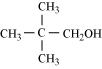
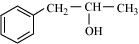
1. Classify the following as primary, secondary and tertiary alcohols:
(i)
(ii) 
(iii) 
(iv)

(v)
(vi)
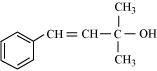
2. Identify allylic alcohols in the above examples.
3. Name the following compounds according to IUPAC system.
(i)
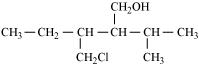
(ii)
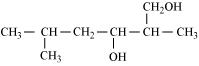
(iii)

(iv)

(v)
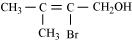
4. Show how are the following alcohols prepared by the reaction of a suitable Grignard reagent on methanal?
(i)
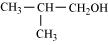
(ii)

5. Write structures of the products of the following reactions:
(i)

(ii)
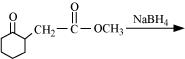
(iii)
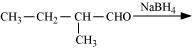
6. Give structures of the products you would expect when each of the following alcohol reacts with (a)  (b) HBr and (c)
  .
.
(i) Butan-1-ol
(ii) 2-Methylbutan-2-ol
7. Predict the major product of acid catalysed dehydration of
(i) 1-Methylcyclohexanol and
(ii) Butan-1-ol
8. Ortho and para nitrophenols are more acidic than phenol. Draw the resonance structures of the corresponding phenoxide ions.
9. Write the equations involved in the following reactions:
(i) Reimer-Tiemann reaction
(ii) Kolbe’s reaction
10. Write the reactions of Williamson synthesis of 2-ethoxy-3-methylpentane starting from ethanol and 3-methylpentan-2-ol.
11. Which of the following is an appropriate set of reactants for the preparation of 1-methoxy-4-nitrobenzene and why?
(i)

(ii)

12. Predict the products of the following reactions:
(i) 
(ii)
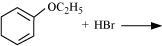
(iii)
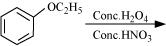
(iv) 
covers both organic and inorganic chemistry. Please note that CBSE has reduced the syllabus for class 12 Chemistry. So, you must check the latest syllabus of CBSE while going through the NCERT solution of any chapter given in the class 12 NCERT book.