Polynomials Exercise 2.3
NCERT solutions for Class 10 Maths Polynomials

NCERT Solutions for Class 10 Maths Polynomials
1. Divide the polynomial p(x) by the polynomial g(x) and find the quotient and remainder in each of the following.
(i) ,
, 
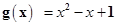
(ii) ,
, 
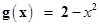
(iii)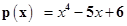 ,
, 
Ans. (i)
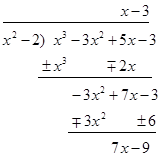
Therefore, quotient = x – 3 and Remainder = 7x – 9
(ii)
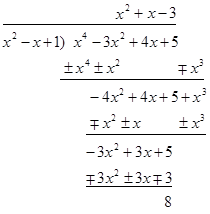
Therefore, quotient =  and, Remainder = 8
(iii)
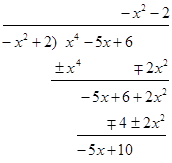
Therefore, quotient =  and, Remainder = −5x + 10
NCERT Solutions for Class 10 Maths Exercise 2.3
2. Check whether the first polynomial is a factor of the second polynomial by dividing the second polynomial by the first polynomial.
(i) 
(ii) 
(iii) 
Ans. (i)
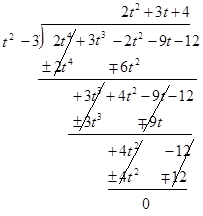
 Remainder = 0
Hence first polynomial is a factor of second polynomial.
(ii)
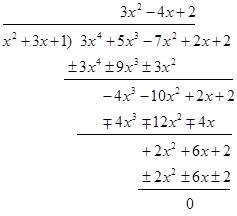
Remainder = 0
Hence first polynomial is a factor of second polynomial.
(iii)
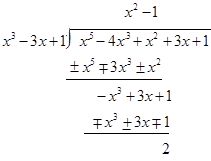
Remainder ≠0
Hence first polynomial is not factor of second polynomial.
NCERT Solutions for Class 10 Maths Exercise 2.3
3. Obtain all other zeroes of  if two of its zeroes are
  and
and  .
.
Ans. Two zeroes of  are and which means that
 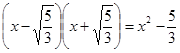 is a factor of .
Applying Division Algorithm to find more factors we get:
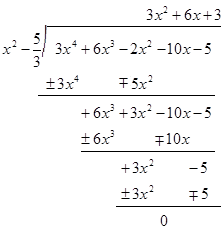
We have 
⇒ 
= (
 )
)
= ()3
= 3()
= 3()(x+1)(x+1)
Therefore, other two zeroes of are −1 and −1.
NCERT Solutions for Class 10 Maths Exercise 2.3
4. On dividing 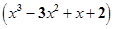 by a polynomial g(x), the quotient and remainder were (x-2) and (-2x+4) respectively. Find g(x).
Ans. Let , q(x) = (x – 2) and r(x) = (–2x+4)
According to Polynomial Division Algorithm, we have
p(x) = g(x).q(x) + r(x)
⇒ 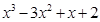 = g(x).(x−2)−2x+4
⇒  −4 = g(x).(x−2)
⇒ 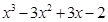 = g(x).(x−2)
⇒ g(x) = 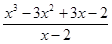
So, Dividing 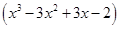 by (x−2), we get
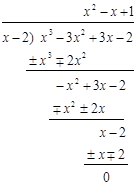
Therefore, we have g(x) = 
NCERT Solutions for Class 10 Maths Exercise 2.3
5. Give examples of polynomials p(x), g(x), q(x) and r(x), which satisfy the division algorithm and
(i) deg p(x) = deg q(x)
(ii) deg q(x) = deg r(x)
(iii) deg r(x) = 0
Ans. (i) Let  , g(x) = 3
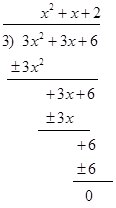
So, we can see in this example that deg p(x) = deg q(x) = 2
(ii) Let  and
and 
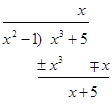
We can see in this example that deg q(x) = deg r(x) = 1
(iii) Let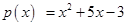 , g(x) = x+3
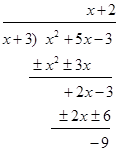
We can see in this example that deg r(x) = 0