Polynomials Exercise 2.2
NCERT solutions for Class 10 Maths Polynomials
NCERT Solutions for Class 10 Maths Polynomials
1. Find the zeroes of the following quadratic polynomials and verify the relationship between the zeros and the coefficients.
(i) 
(ii) 
(iii) 
(iv) 
(v) 
(vi) 
Ans. (i) 
Comparing given polynomial with general form  ,
,
We get a = 1, b = -2 and c = -8
We have,

= x(x−4)+2(x−4) = (x−4)(x+2)
Equating this equal to 0 will find values of 2 zeroes of this polynomial.
(x−4)(x+2) = 0
⇒ x = 4, −2 are two zeroes.
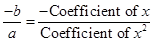
Sum of zeroes = 4 – 2 = 2 = 
= 
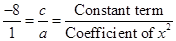
Product of zeroes = 4 × −2 = −8
= 
(ii) 
Here, a = 4, b = -4 and c = 1
We have,
=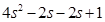
=2s(2s−1)−1(2s−1)
= (2s−1)(2s−1)
Equating this equal to 0 will find values of 2 zeroes of this polynomial.
⇒ (2s−1)(2s−1) = 0
⇒ s = 
Therefore, two zeroes of this polynomial are
Sum of zeroes =  = 1 =
= 1 = 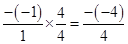
=
Product of Zeroes = 
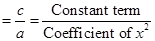
(iii) 
Here, a = 6, b = -7 and c = -3
We have,
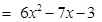

= 3x(2x−3)+1(2x−3) = (2x−3)(3x+1)
Equating this equal to 0 will find values of 2 zeroes of this polynomial.
⇒ (2x−3)(3x+1) = 0
⇒ x = 
Therefore, two zeroes of this polynomial are
Sum of zeroes = 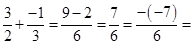
Product of Zeroes = 
(iv) 
Here, a = 4, b = 8 and c = 0

Equating this equal to 0 will find values of 2 zeroes of this polynomial.
⇒ 4u(u+2) = 0
⇒ u = 0,−2
NCERT Solutions for Class 10 Maths Exercise 2.2
Therefore, two zeroes of this polynomial are 0, −2
Sum of zeroes = 0−2 = −2 = 
=
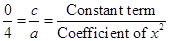
Product of Zeroes  = 0
= 0
= 
(v) 
Here, a = 1, b = 0 and c = -15
We have, ⇒  ⇒ t =
⇒ t = 
Therefore, two zeroes of this polynomial are 
Sum of zeroes = 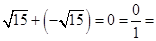
Product of Zeroes = 
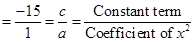
(vi) 
Here, a = 3, b = -1 and c = -4
We have, = 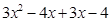
= x(3x−4)+1(3x−4) = (3x−4)(x+1)
Equating this equal to 0 will find values of 2 zeroes of this polynomial.
⇒ (3x−4)(x+1) = 0
⇒ x = 
Therefore, two zeroes of this polynomial are
Sum of zeroes = 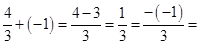
Product of Zeroes = 
NCERT Solutions for Class 10 Maths Exercise 2.2
2. Find a quadratic polynomial each with the given numbers as the sum and product of its zeroes respectively.
(i)  , −1
, −1
(ii)  , 13
, 13
(iii) 0, 
(iv) 1, 1
(v) 
(vi) 4, 1
Ans. (i) , −1
Let quadratic polynomial be
Let α and β are two zeroes of above quadratic polynomial.
α+β = = 
α × β = -1 
 =
= 


Quadratic polynomial which satisfies above conditions = 
(ii) 
Let quadratic polynomial be
Let α and β be two zeros of above quadratic polynomial.
α+β =  =
=
α × β =  which is equal to

Quadratic polynomial which satisfies above conditions = 
(iii) 0,
Let quadratic polynomial be 
Let α and β be two zeros of above quadratic polynomial.
α+β = 0  =
=
α  β =
β =  =
=
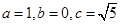
Quadratic polynomial which satisfies above conditions 
(iv) 1, 1
Let quadratic polynomial be
Let α and β be two zeros of above quadratic polynomial.
α+β = 1  =
=
αβ = 1  =
=

Quadratic polynomial which satisfies above conditions = 
(v)
Let quadratic polynomial be
Let α and β be two zeros of above quadratic polynomial.
α+β =  =
=
α β = =
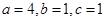
Quadratic polynomial which satisfies above conditions = 
(vi) 4, 1
Let quadratic polynomial be
Let α and β be two zeros of above quadratic polynomial.
α+β = 4  =
=
α × β = 1 =

Quadratic polynomial which satisfies above conditions 