Real Numbers Exercise 1.4
NCERT solutions for Class 10 Maths Real Numbers
NCERT Solutions for Class 10 Maths Real Numbers
1. Without actually performing the long division, state whether the following rational numbers will have a terminating decimal expansion or a non-terminating decimal expansion.
(i) 
(ii) 
(iii) 
(iv) 
(v) 
(vi) 
(vii) 
(viii) 
(ix) 
(x) 
Ans. According to Theorem, any given rational number of the form  where p and q are co-prime, has a terminating decimal expansion if q is of the form
  , where m and n are non-negative integers.
(i)
q = 3125 = 
Here, denominator is of the form , where m = 5 and n = 0.
It means rational number has a terminating decimal expansion.
(ii)
q = 8 = 
Here, denominator is of the form , where m = 0 and n = 3.
It means rational number has a terminating decimal expansion.
(iii)
q = 455 = 
Here, denominator is not of the, where m and n are non-negative integers.
It means rational number has a non-terminating repeating decimal expansion.
(iv) 
q = 320 =  =
= 
Here, denominator is of the form , where m = 1 and n = 6.
It means rational number has a terminating decimal expansion.
(v)
q = 343 = 
Here, denominator is not of the form , where m and n are non-negative integers.
It means rational number has non-terminating repeating decimal expansion.
(vi)
q = 
Here, denominator is of the form , where m = 2 and n = 3 are non-negative integers.
It means rational number has terminating decimal expansion.
(vii)
q = 
Here, denominator is not of the form , where m and n are non-negative integers.
It means rational number has non-terminating repeating decimal expansion.
(viii) 

Here, denominator is of the form , where m = 1 and n = 0.
It means rational number has terminating decimal expansion.
(ix)
q = 10 = 
Here, denominator is of the form , where m = 1 and n = 1.
It means rational number has terminating decimal expansion.
(x) 

Here, denominator is not of the form , where m and n are non-negative integers.
It means rational number has non-terminating repeating decimal expansion.
NCERT Solutions for Class 10 Maths Exercise 1.4
2. Write down the decimal expansions of those rational numbers in Question 1 which have terminating decimal expansions.
Ans. (i)
(ii)
(iv)
(vi)
(viii)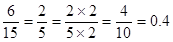
(ix)
NCERT Solutions for Class 10 Maths Exercise 1.4
3. The following real numbers have decimal expansions as given below. In each case, decide whether they are rational or not. If, they are rational, and of the form , what can you say about the prime factors of q?
(i) 43.123456789
(ii) 0.1201120012000120000…
(iii) 
Ans. (i) 43.123456789
It is rational because decimal expansion is terminating. Therefore, it can be expressed in form where factors of q are of the form  where n and m are non-negative integers
(ii) 0.1201120012000120000…
It is irrational because decimal expansion is neither terminating nor non-terminating repeating.
(iii)
It is rational because decimal expansion is non-terminating repeating. Therefore, it can be expressed in form where factors of qare not of the form where n and m are non-negative integers.